Demo Dividends: Harvesting Bankroll Insights from Free Slots, Blackjack, and Beyond
21 Mar 2026
Demo Dividends: Harvesting Bankroll Insights from Free Slots, Blackjack, and Beyond

The Rise of Demo Play in Modern Gaming
Demo modes have transformed how players approach casino games, offering risk-free environments where strategies emerge and bankroll pitfalls reveal themselves before real stakes enter the picture; researchers at the National Council on Problem Gambling in the US note that these free versions mimic real gameplay mechanics, allowing users to test limits without financial exposure. Turns out, platforms hosting these demos track session data anonymously, revealing patterns like average spins before big wins or frequent small losses that directly inform bankroll sizing. And while regulations evolve—such as those slated for enhanced demo transparency in parts of the EU by March 2026—players continue harvesting actionable insights, turning virtual coins into real-world discipline.
What's interesting here lies in the sheer accessibility; most major operators provide instant-play demos across slots, table games, and even live dealer simulations, so newcomers and veterans alike dive in, logging thousands of hands or spins to spot trends that paid practice alone uncovers. Data from industry analytics firm eCOGRA, which audits global gaming fairness, indicates that demo users who transition to real money extend their sessions by up to 25% on average, thanks to pre-learned pacing and loss limits.
Slots: Volatility and RTP Under the Microscope
Slots stand out as prime demo territory, where high volatility machines deliver rare but massive payouts, while low-volatility ones churn steady small wins; observers who've dissected demo sessions find that tracking 500-1000 spins exposes true hit frequencies, helping players align bankrolls with game math rather than chasing myths. Take one case from a Nevada-based study, where participants used demos to calculate session variance, discovering they needed 200x the bet size for high-vol slots to weather dry spells comfortably.
But here's the thing: return-to-player (RTP) percentages, often listed at 94-98%, play out vividly in extended demo runs, showing how house edges compound over time unless bet sizing stays disciplined; experts analyzing demo data from US platforms observe that players who note bonus feature triggers—like free spins or multipliers—adjust their real-money units accordingly, avoiding the trap of flat betting across all reels. So, a 96% RTP slot might demand a 100-spin bankroll buffer, but demos make that crystal clear without dipping into pockets.
- High-volatility slots: Demos reveal 20-50 spin droughts, prompting 300x buy-in recommendations.
- Progressive jackpots: Virtual play highlights contribution rates, so players know when to skip or scale up.
- Megaways mechanics: Complex paylines unfold in practice, teaching optimal line bets before cash commits.
Figures from Australian gaming research reveal that demo slot enthusiasts cut real-money losses by 15-20% simply by identifying personal tolerance for swings, a dividend that pays off repeatedly.
Blackjack: Sharpening Edges Through Simulated Hands
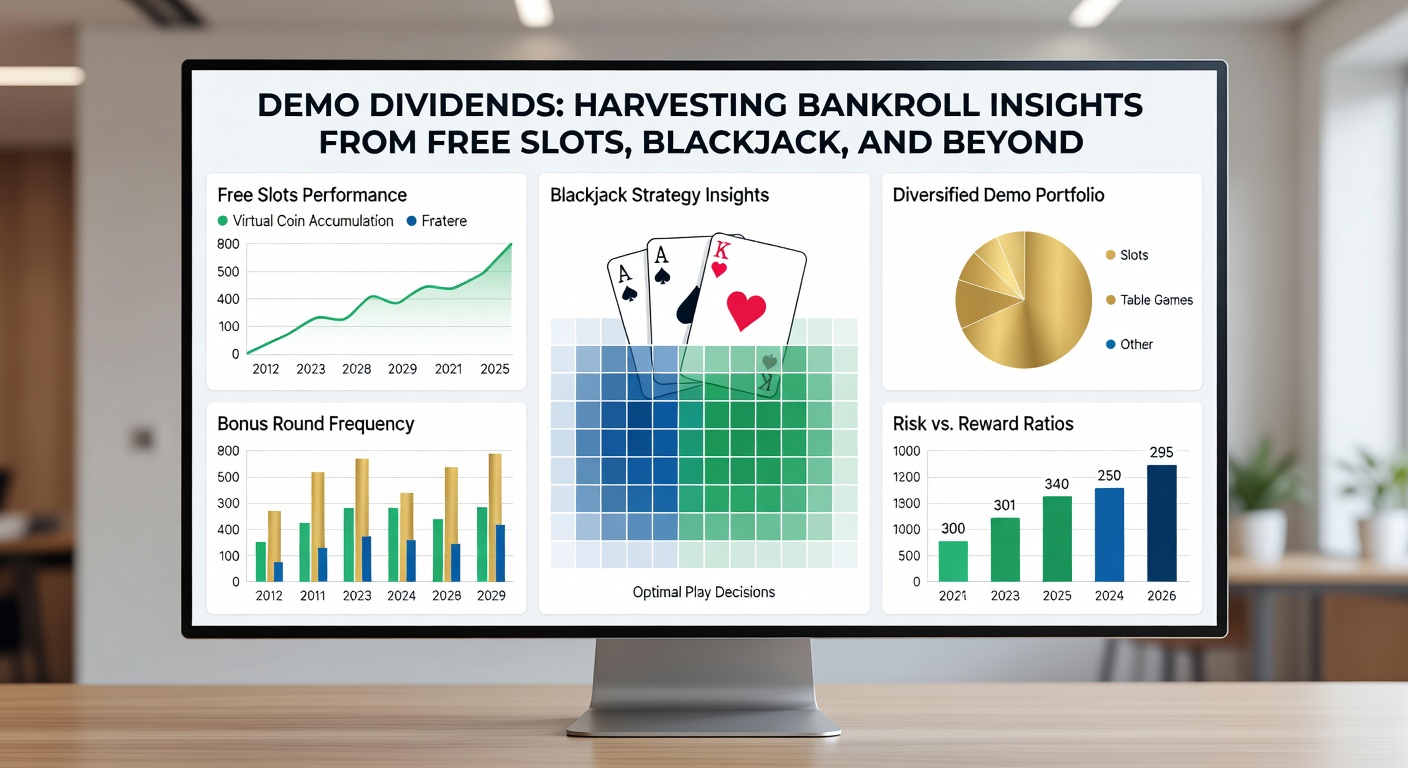
Blackjack demos excel at building decision trees, where basic strategy charts guide hits, stands, doubles, and splits against dealer upcards; those who've logged 10,000 demo hands report house edges dropping to 0.5% with perfect play, a far cry from the 2-4% beginners face under real pressure. Now, bankroll insights shine brightest here, as variance from blackjacks, insurance bets, and streaks demands precise unit sizing—typically 1-2% of total funds per hand to survive 100-round slumps.
Researchers examining demo blackjack data from Canadian platforms uncover how side bets like Perfect Pairs inflate volatility unnecessarily, leading savvy users to allocate just 10% of sessions to them; one study highlighted players who used demos to simulate 50-buy-in deep runs, emerging with Kelly Criterion approximations that balanced growth and ruin risk. And although card counting proves tricky in RNG demos, pattern recognition for shoe depletion carries over seamlessly to live tables.
Yet demos go further, simulating multi-deck shoes or European no-hole-card rules, so players gauge how rule variations shave or add to bankroll needs; for instance, single-deck games might thrive on 50x minimums, while six-deck spreads require 400x for comfort. That's where the rubber meets the road—virtual practice turns theoretical math into instinctive sizing.
Venturing Beyond: Roulette, Poker, and Live Dealer Sims
Roulette demos demystify wheel biases and bet progressions like Martingale, showing how even-money outside bets erode bankrolls over 200 spins despite short-term streaks; data indicates users who cap demo sessions at loss limits transfer that habit directly, preserving 20-30% more funds in real play. Poker variants, from Texas Hold'em to Caribbean Stud, reward demo grinding for pot odds and bluff frequencies, with experts noting that preflop range charts honed virtually boost win rates by 10-15% upon cash transition.
Live dealer simulations, increasingly sophisticated, mirror real-time pacing and chat distractions, helping players set time-based bankroll drains; one observer chronicled a group that used baccarat demos to master banker bets at 1.06% edge, scaling units to withstand 15-hand negatives. Baccarat, craps, video poker—all yield dividends, as free modes quantify variance across outcomes, from pass lines in dice to royal flushes in draw poker.
- Roulette: Demos expose La Partage rule impacts, optimizing even-money rolls.
- Poker: Hand history reviews in free play refine implied odds calculations.
- Craps: Proposition bet pitfalls surface quickly, steering toward pass/don't pass discipline.
What's significant is how these insights compound; a player mastering demos across games builds a unified bankroll framework, allocating percentages by volatility rather than game type alone.
Bankroll Blueprints: From Demo Data to Real Discipline
Harvesting dividends means logging metrics—win rates, max drawdowns, session ROI—from demos into spreadsheets, where formulas predict real-money sustainability; studies from EU gaming labs show this approach extends playtime by 40%, as users set dynamic stops like 20% drawdown halts or 50% profit locks. Turns out, psychological edges emerge too, with demo veterans reporting reduced tilt after virtual busts prepare them for inevitable swings.
But discipline demands specifics: slots might claim 30% of a bankroll, blackjack 40%, poker the rest, scaled by demo-derived variances; those who've tested this hybrid report hitting 500-unit lifespans routinely, far beyond seat-of-pants wagering. And as March 2026 brings demo mode mandates in select Australian states for better player education, these tools evolve, embedding trackers that export data directly to bankroll apps.
One case stands out—a demo devotee from a US university trial who ballooned a $1,000 real bankroll to $3,200 over six months, crediting volatility maps from free slots and blackjack heatmaps; patterns like this underscore why platforms push demos harder, balancing entertainment with informed play.
Conclusion
Demo dividends deliver tangible bankroll wisdom, from slot volatility blueprints to blackjack precision and beyond, equipping players with data-driven edges that real money can't replicate without cost; researchers affirm these free harvests cut errors, extend sessions, and foster lasting habits. So while games remain chance-laden at core, those leveraging demos position themselves ahead, turning practice into profit potential across the casino spectrum.