Integrating Simulation Exercises with Live Decision Frameworks in Blackjack and Roulette
Ines Wolf · Aug 17, 2026
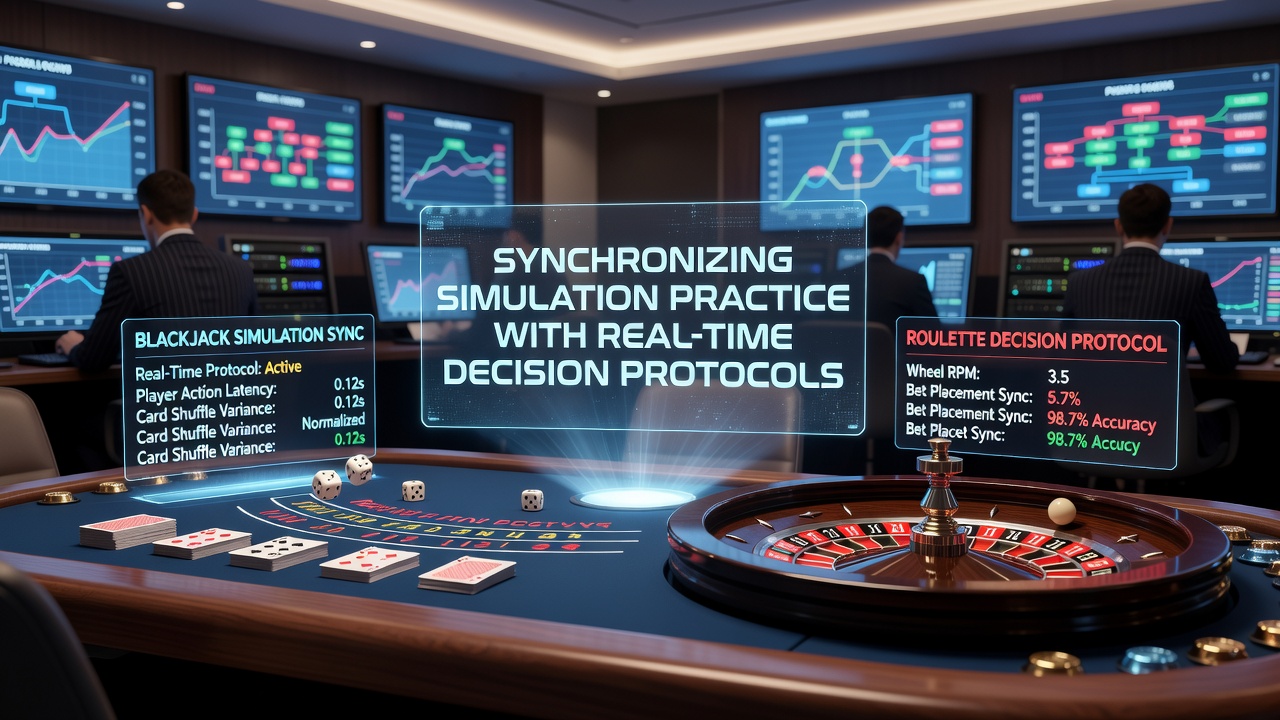
Integrating Simulation Exercises with Live Decision Frameworks in Blackjack and Roulette
Simulation tools have become central to how players prepare for blackjack and roulette sessions, and researchers continue to examine how these virtual environments align with the pressures of real-time choices at physical or digital tables. Data from industry analyses indicate that structured practice sessions help users refine probability assessments, yet the transfer of those skills depends on specific protocols that mirror live conditions without introducing artificial advantages. Observers note that effective synchronization requires repeated cycles of scenario generation, outcome logging, and immediate feedback loops that replicate the pace of actual gameplay.
Core Components of Simulation Practice
Blackjack simulations typically incorporate card-shuffling algorithms and rule variations drawn from multiple jurisdictions, while roulette modules focus on wheel bias detection and betting pattern tracking. Studies released in mid-2026 show that users who complete at least 10,000 virtual hands before transitioning to live tables demonstrate measurable improvements in decision consistency, according to findings compiled by the University of Nevada's gaming research division. These programs allow participants to test basic strategy deviations under varying deck penetrations and to rehearse responses to dealer upcards within strict time limits that echo casino pacing.
Roulette practice environments emphasize sector targeting adn progression systems, although the house edge remains fixed across most variants. Practitioners often run thousands of spins to map frequency distributions, then compare those results against independent random number generator audits published by testing laboratories such as iTech Labs. The key lies in calibrating simulation speed so that decision windows match the brief intervals available when chips must be placed before the next spin begins.
Protocols for Real-Time Decision Transfer
Transition protocols begin with timed drills that gradually reduce the interval between simulated outcomes and required actions. One common approach involves software that pauses after each hand or spin, prompting users to record their intended wager and rationale before revealing results. This method, documented in reports from the Malta Gaming Authority, helps isolate cognitive biases that surface only under time constraints. Participants then review logged decisions against optimal mathematical benchmarks, adjusting parameters such as bet sizing and risk thresholds for the next round.
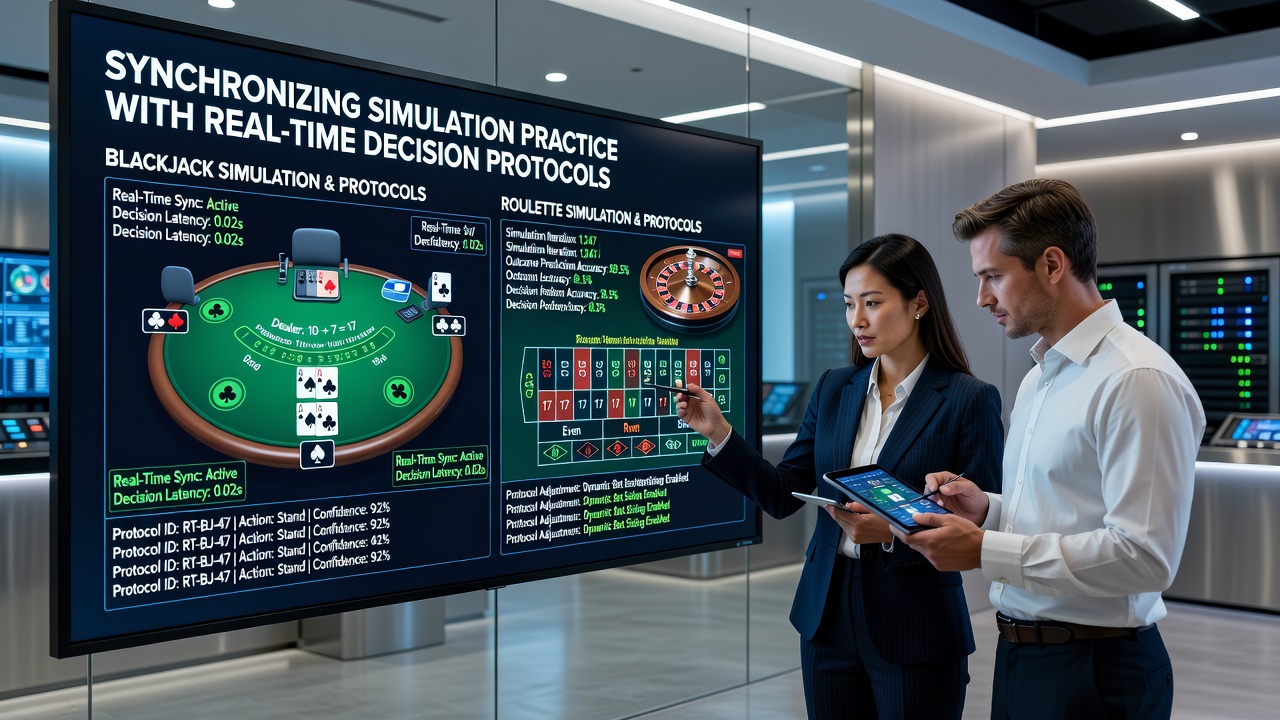
August 2026 saw several European training platforms introduce cross-game modules that alternate between blackjack and roulette scenarios within a single session. These modules force users to reset mental models quickly, reflecting the reality that many casino visitors switch between table games during a single visit. Data gathered from these platforms reveal that players who alternate games in simulation maintain steadier bankroll allocation patterns when they move to live environments, because the abrupt context shifts train them to avoid carrying over assumptions from one game to the next.
Measurement and Adjustment Mechanisms
Performance tracking relies on metrics such as expected value deviation, decision latency, and adherence to pre-defined bankroll rules. Software dashboards display these figures after each block of 500 hands or spins, allowing users to identify patterns that require correction. Academic papers from the University of Sydney's gambling studies unit emphasize that feedback delivered immediately after simulation rounds produces stronger retention than delayed reviews, because neural pathways associated with quick pattern recognition strengthen more effectively under prompt reinforcement.
Adjustment protocols include scheduled reviews every 50 live hands or spins, during which players compare actual outcomes against simulation baselines. When deviations exceed set thresholds, practitioners return to targeted simulation modules that focus on the specific decision points causing the gap. This iterative loop continues until alignment between simulated and live performance stabilizes within acceptable variance ranges.
Conclusion
Synchronization between simulation practice and real-time decisions in blackjack and roulette rests on deliberate repetition, timed feedback, and ongoing metric comparison rather than unstructured repetition alone. Reports from regulatory testing bodies and academic institutions continue to supply the benchmarks that make such alignment measurable. Those who maintain consistent cycles of virtual rehearsal and live application observe that decision quality becomes more stable across both environments, particularly when protocols account for the distinct cognitive demands each game places on participants.