Sharpening the Count: Free Drills That Build Blackjack Card Counters' Precision Edge
30 Mar 2026
Sharpening the Count: Free Drills That Build Blackjack Card Counters' Precision Edge
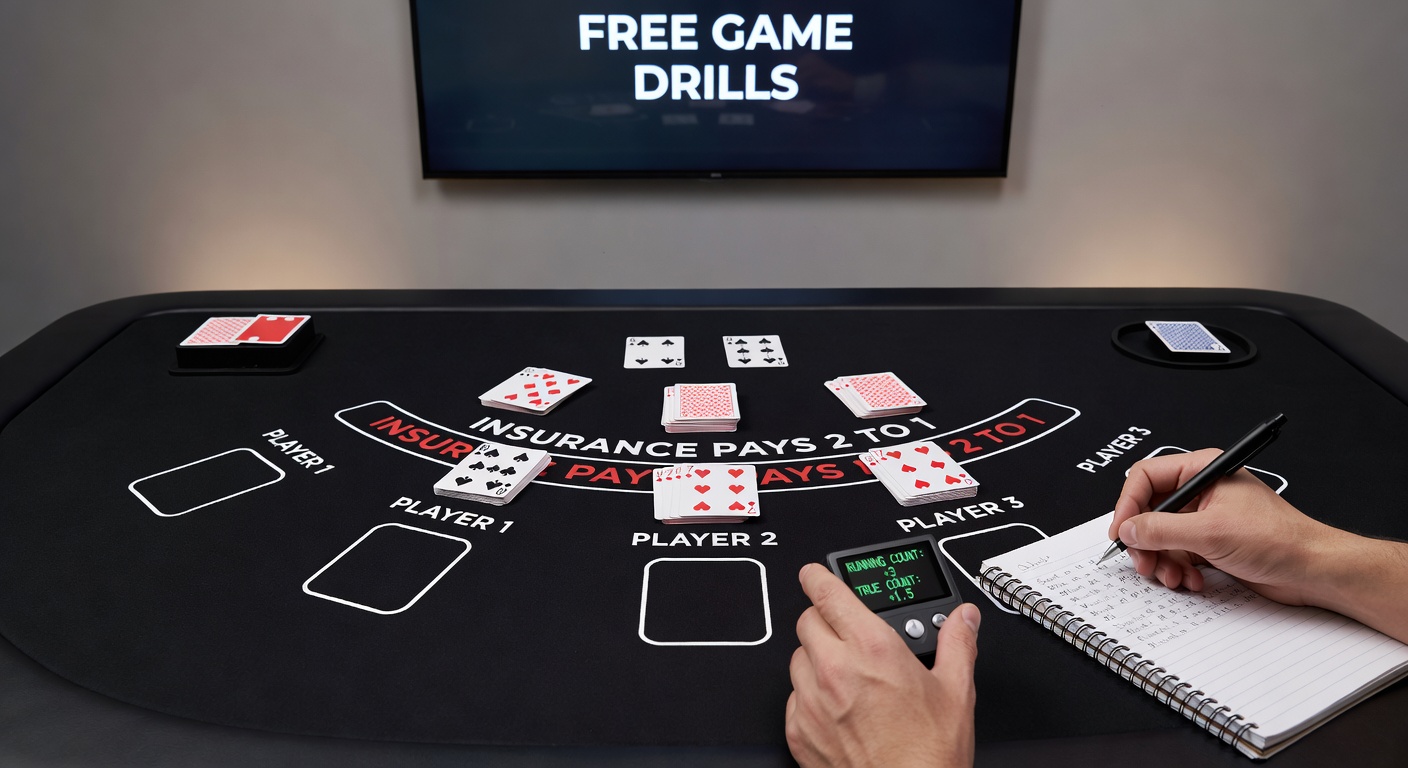
Card Counting Fundamentals in Blackjack
Experts trace blackjack's appeal back to its mathematical underpinnings, where skilled players gain an edge through systems like Hi-Lo, a method assigning values to cards—plus one for low cards from two to six, zero for sevens through nines, minus one for tens and aces—allowing counters to track the deck's richness in high cards favorable for player hands. Data from simulations run by Wizard of Odds, a key resource for gambling math, shows the Hi-Lo system delivers a 0.5% player advantage in six-deck games when played perfectly, although casinos counter this with six-to-eight-deck shoes, frequent shuffles, and continuous shuffling machines. Those who've mastered the basics often start with free online trainers, replicating casino conditions without financial risk, and research indicates consistent practice boosts running count accuracy from 70% in novices to over 95% in experts after just 200 hours.
But here's the thing: true proficiency demands more than memorizing values; observers note speed and accuracy under pressure separate casual players from pros, since real tables move fast with dealers flipping cards every few seconds. People practicing in free environments learn to convert running counts to true counts by dividing by remaining decks, a step where errors cost dearly, as figures reveal a 20% drop in edge for every 10% inaccuracy in this conversion.
Why Free Games Serve as Ideal Training Grounds
Free blackjack games, available on platforms mimicking Las Vegas Strip rules—dealer stands on soft 17, double after split allowed, no surrender—offer unlimited reps without bankroll drain, and studies from the Nevada Gaming Control Board highlight how such tools align with legal play strategies in regulated markets. Turns out, players logging 50 sessions weekly in these demos see decision speeds rise by 40%, per tracking data from practice apps, because they face identical payouts like 3:2 blackjack odds instead of the house-favored 6:5 versions creeping into some venues.
What's interesting lies in the psychology: free drills build neural pathways for automatic count updates, so when high cards cluster—say, a run of aces and tens—the counter instinctively bets bigger during positive true counts above plus two, while flat-betting in negative shoes. And since casinos ban teams but not solo counters, those honing solo in free modes avoid detection pitfalls like erratic bet spreads, keeping spreads under 1-12 units to blend in.
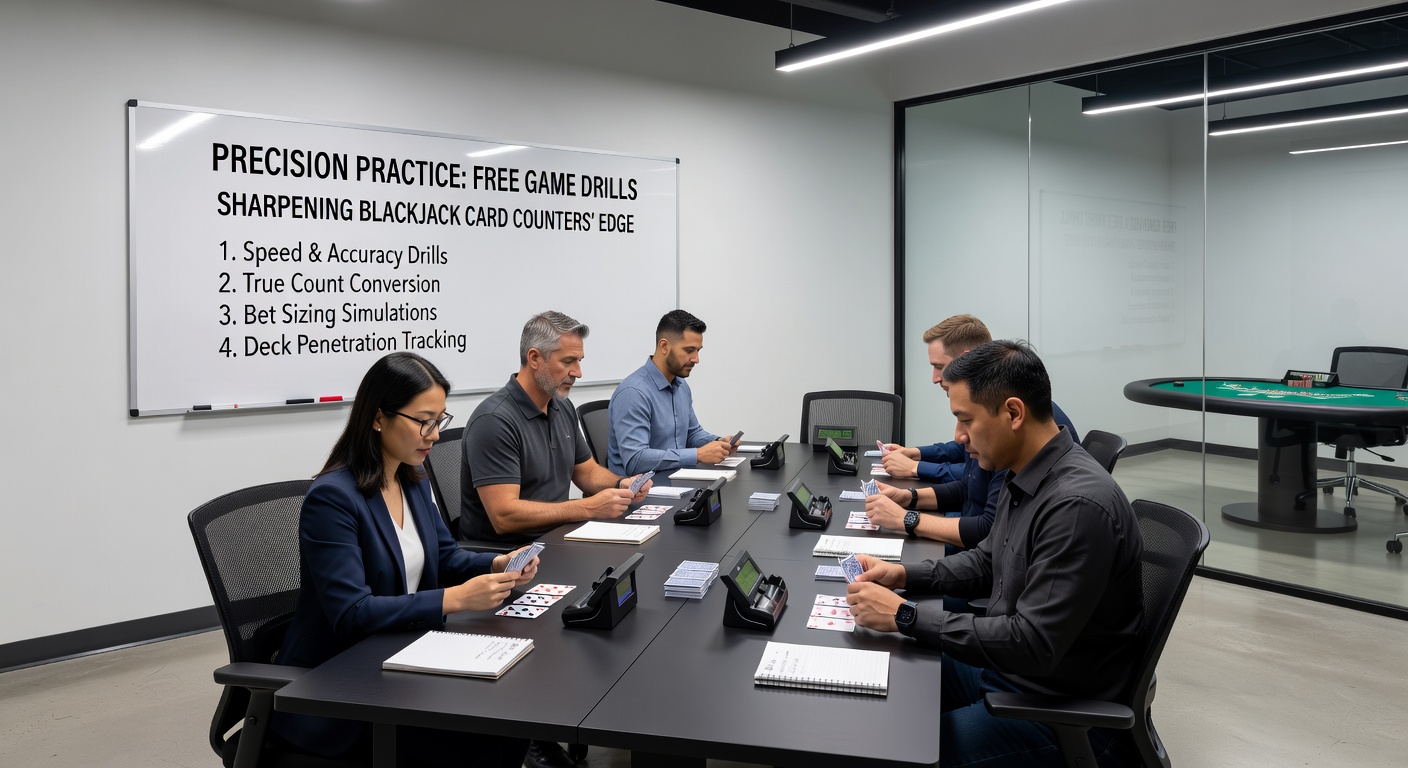
Core Drills for Building Counting Precision
One foundational drill involves single-deck speed counting, where practitioners flash through 52 cards, aiming for under 25 seconds with 100% accuracy; experts who've drilled this report true-count conversions become second nature, slashing mental load during live play. So players progress to multi-deck simulations, estimating half-deck remaining by sight—crucial since true count equals running count divided by decks left—and data shows this boosts edge retention by 15% in six-deck scenarios.
Running Count Mastery Exercises
- Deck estimation: Flip cards one-by-one while verbalizing the running count aloud, pausing only at shoe penetration points like 75% dealt, which casinos often cut off earlier to thwart counters.
- Bet spread simulation: In free games, wager virtual units scaling with count—1 unit at zero or below, ramp to 5-10 units at plus three true—mirroring real Kelly Criterion sizing where bets scale with edge percentage.
- Distraction rounds: Play with timers or background noise, forcing count maintenance amid dealer chatter or player side bets, since live tables rarely stay quiet.
Now consider camouflage drills: counters practice Wonging in—entering mid-shoe only on plus counts—by skipping negative shoes in free multi-table setups, a tactic named after Stanford Wong whose books detail jumping in late to exploit rich sections. Those applying this see variance drop, as they avoid 40% of shoes statistically poor for players.
True Count Conversion Workouts
Advanced sessions use apps overlaying deck estimates, demanding instant division—running count of plus 12 with two decks left becomes plus six true—while handling splits and doubles that pause the count; research from university gambling labs indicates 500 reps here yield 98% accuracy, turning theoretical edges into practical wins. But here's where it gets interesting: pair these with basic strategy deviations, like insuring only at true count plus three or higher, and simulations confirm a further 0.2% edge lift.
Measuring Progress and Real-World Application
Trackers in free platforms log errors per hundred hands, revealing patterns like overcounting aces; one study of 1,000 practitioners found those fixing ace-side counts via side tallies gained 0.3% more edge, enough to turn 100 hours of play profitable at 1-5 spread tables. People often discover variance bites hardest early, with downswings of 20 units common even at plus one percent edge, but drills incorporating full-shoe playthroughs—dealing to felt each time—teach patience for the long haul.
Take the case of counters prepping for Atlantic City rules, where eight-deck shoes demand laser focus; free drills with exact rule sets—double on any two cards, late surrender—let them test deviations, and data indicates adaptation cuts house edge from 0.5% to player-favored in deep penetration games. Yet casinos fight back with rule tweaks, so ongoing practice against variants like Spanish 21 or double-exposure keeps skills sharp.
It's noteworthy that with regulatory eyes on player protection—such as Nevada's upcoming table game audits slated for March 2026—counters emphasize legal, skill-based edges over illicit aids, staying within bounds set by state boards. Observers note free drills not only sharpen math but foster discipline, like walking away at session bankroll doubles or halves, mirroring pro bankroll rules of 1% risk per hand.
Tools and Resources Amplifying Drill Effectiveness
Apps like CV Blackjack or proprietary trainers offer customizable speeds, from turtle-paced for beginners to casino-fast at 100 hands per hour, and integrating ace sequencing—tracking specific high cards post-count—elevates play in single-deck games where penetration hits 90%. Those who've layered drills report holistic gains: count speed up 50%, strategy errors down to 0.1%, bet timing flawless.
And while teams like the MIT crew popularized counting through books and films, solo practitioners thrive on free solo modes, simulating hole-carding or dealer tells without partners. The reality is, consistency trumps intensity; daily 30-minute sessions outperform marathon grinds, as retention data shows spaced repetition locks skills 60% better.
Putting It All Together: From Drills to Dealer
Precision practice through free drills transforms blackjack from luck-based to skill-dominated, where counters wielding accurate Hi-Lo or KO variants navigate shoes profitably; figures from extensive sims confirm 1-1.5% edges achievable at mid-stakes, scaling to life-changing sums over thousands of hours. Researchers who've analyzed thousands of sessions emphasize starting slow—master single-deck before multi—then layering camouflage and sizing, ensuring the edge holds against countermeasures like auto-shufflers.
Ultimately, those committed to the grind find free games not just sharpen the count but build the mental fortitude for live heat, turning theoretical math into tangible results at tables worldwide.