25 Jun 2026
Virtual Training Platforms Align With Compliance Demands Across Multi-Table Gaming Operations

Digital practice environments allow participants to rehearse multi-table scenarios without financial stakes, yet these same systems must satisfy layered regulatory requirements that govern data handling, access controls, and operational transparency. Operators integrate simulation modules into broader platforms where users switch between practice and real-money modes, creating points where compliance checks activate automatically. Research from the American Gaming Association indicates that simulation traffic now accounts for measurable portions of overall platform activity in regulated markets.
Core Technical Overlaps Between Simulations and Oversight Rules
Multi-table setups require simultaneous session management, and digital practice tools replicate these demands by running parallel instances that mirror live conditions. Compliance frameworks address session integrity through mandatory logging of user actions, even when no real currency moves. Systems record keystrokes, decision timestamps, and table transitions to support audit trails that regulators examine during periodic reviews. Those who design these environments note that separating practice data from financial records prevents commingling while still allowing aggregated analytics for responsible gaming reports.
Access verification forms another intersection point. Platforms apply the same identity protocols to demo accounts as they do to funded ones, because regulators view unrestricted simulation access as a potential entry vector for prohibited users. Age gates, device fingerprinting, and geolocation checks operate identically across both modes, ensuring that practice environments do not become bypass routes. In jurisdictions with June 2026 implementation deadlines for enhanced digital safeguards, operators have already begun testing unified verification layers that cover simulation traffic without creating separate compliance streams.
Data Management and Reporting Requirements
Practice environments generate substantial behavioral datasets that operators must handle under privacy statutes and gaming-specific retention rules. These datasets include hand histories, time-on-task metrics, and multi-table switching patterns, all of which feed into broader compliance dashboards. Regulatory bodies require anonymized summaries rather than individual profiles, yet the underlying collection mechanisms remain subject to inspection. Observers note that platforms maintaining unified data architectures for both practice and real-money activity reduce administrative duplication while preserving the ability to isolate practice-only records during audits.
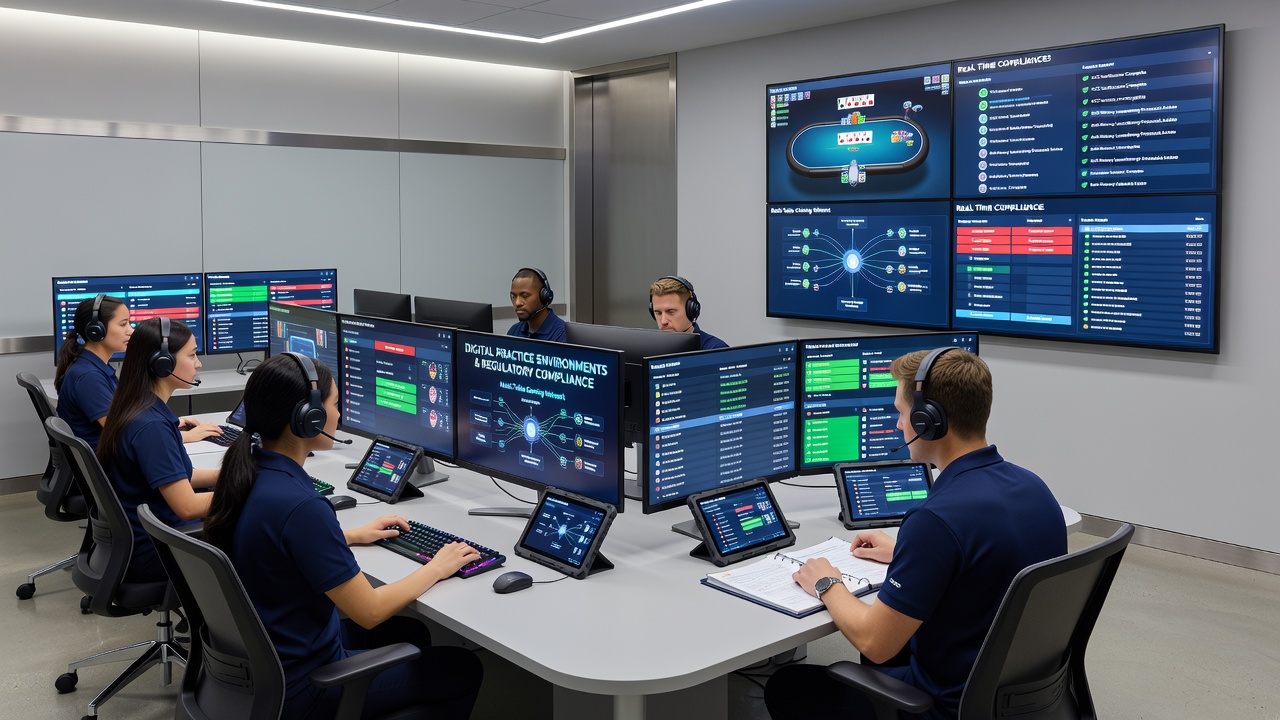
Reporting obligations extend to volume thresholds and anomaly detection. When simulation usage spikes in particular regions or demographic segments, systems flag these patterns for internal review teams. Such monitoring aligns with expectations set by bodies like the Alcohol and Gaming Commission of Ontario, which evaluates how operators use non-financial activity to refine harm-reduction measures. The resulting reports incorporate practice data as a leading indicator rather than treating it as exempt from oversight.
Operational Controls in Multi-Table Contexts
Multi-table play introduces complexity around session limits and simultaneous account management. Digital practice modules replicate these conditions so users can test personal pacing strategies, yet operators must enforce identical break reminders and time caps regardless of whether real funds are involved. This uniformity stems from rules that treat extended engagement, simulated or otherwise, as a factor in responsible gaming calculations. Technical teams therefore configure practice servers to mirror live enforcement logic, eliminating the need for parallel policy sets.
Cross-border considerations add another dimension. Participants accessing practice environments from different jurisdictions encounter varying definitions of permissible simulation features. Platforms respond by embedding jurisdiction-aware toggles that activate or restrict certain practice functions based on user location at login. These controls draw on geofencing data already required for real-money compliance, demonstrating how existing infrastructure supports expanded oversight without new architectural layers.
Conclusion
Digital practice environments and regulatory compliance converge at multiple operational layers within multi-table gaming frameworks. Shared verification systems, unified data protocols, and mirrored enforcement mechanisms allow operators to maintain consistency while satisfying oversight demands. As implementation dates such as June 2026 approach in several markets, the integration of simulation tools into compliant architectures continues to evolve through technical refinements that treat practice activity as an integral rather than separate component of regulated operations.